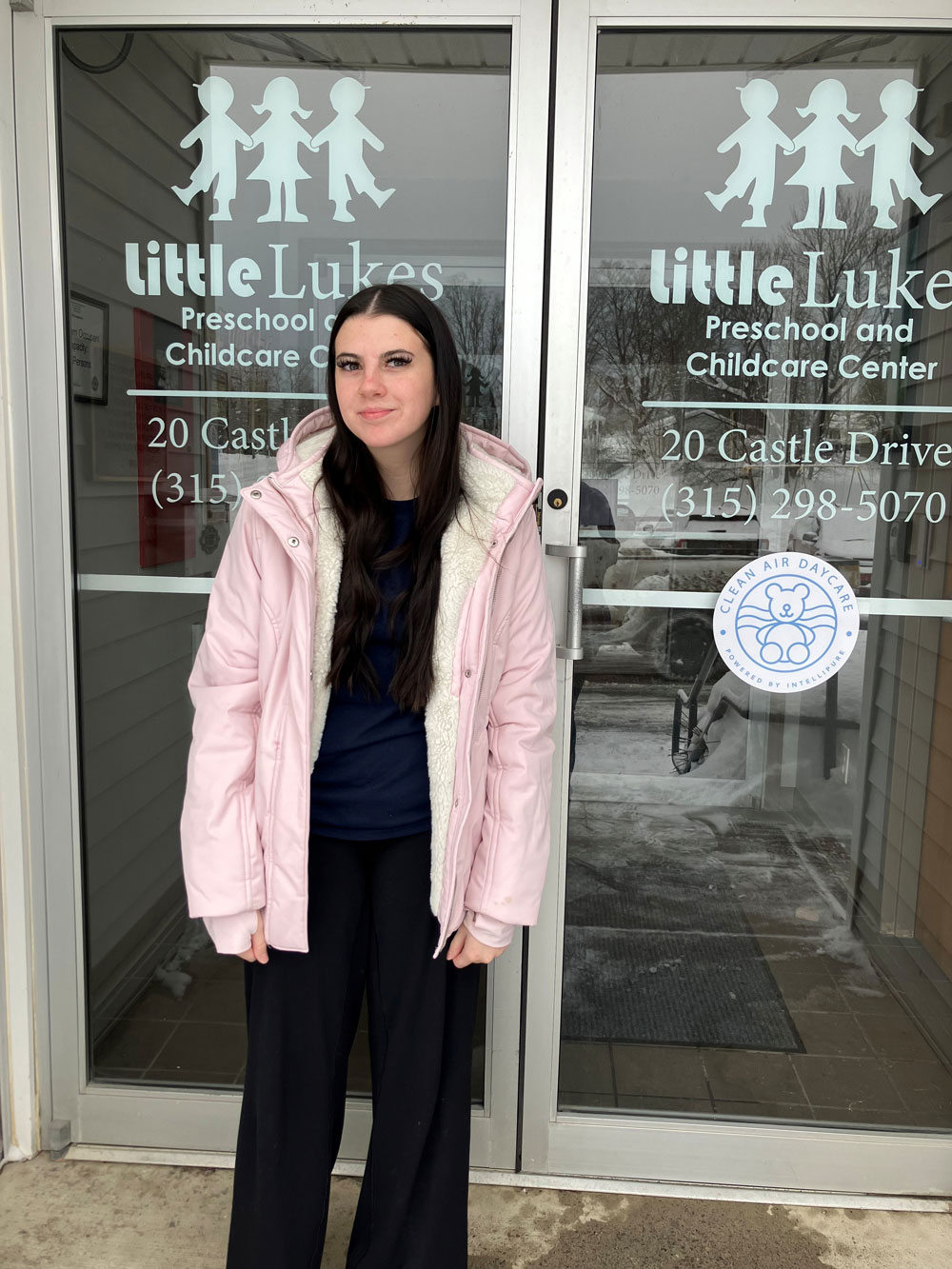
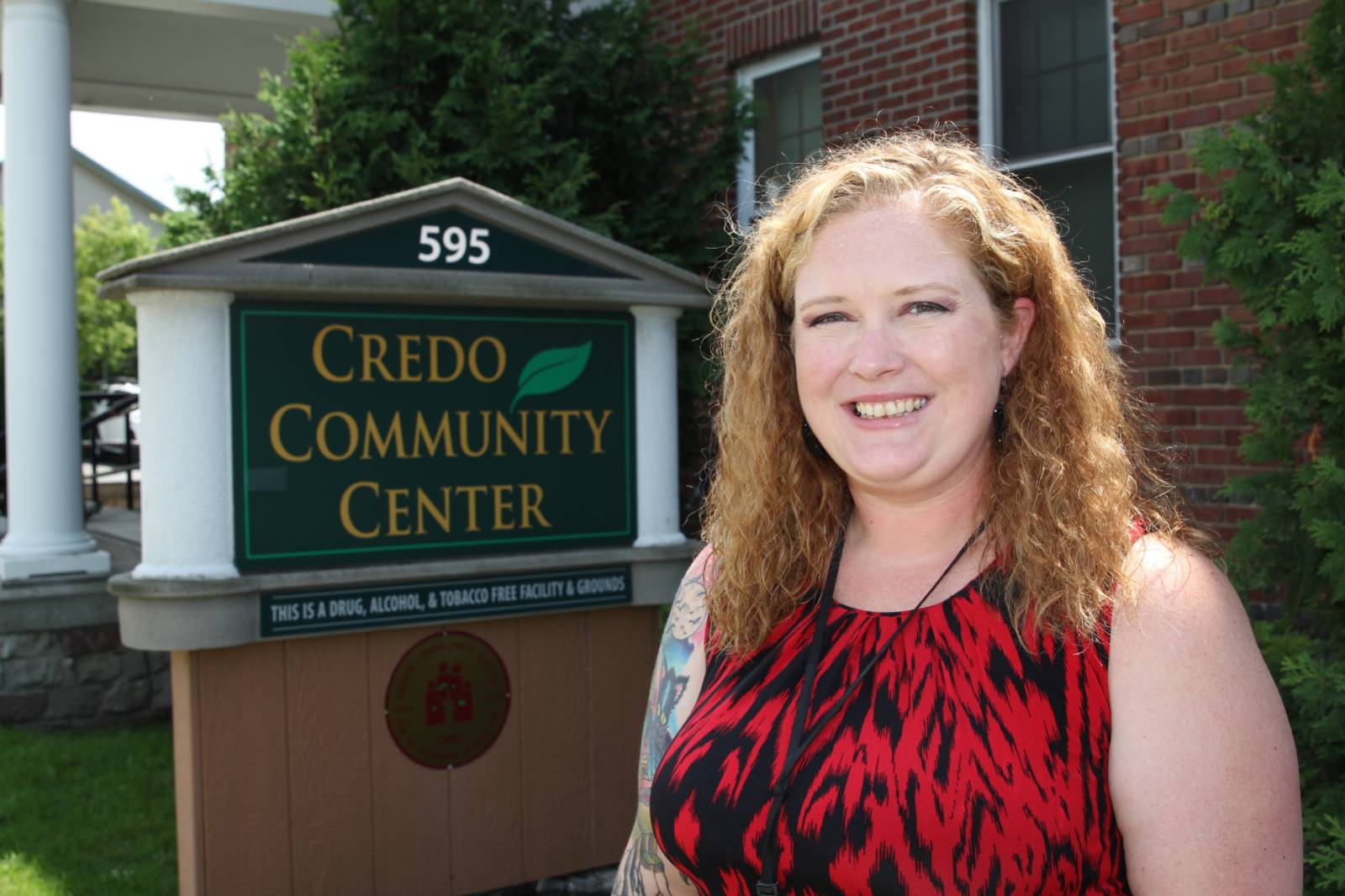
Kaileana Cough, an employee and apprentice at Little Lukes Preschool and Childcare
Center in Pulaski participates in a paid, registered apprenticeship program approved
by the New York State Department of Labor.
Jefferson Roundtable Spurs Early Childhood Apprenticeships at Little Lukes Preschool
Staying true to its mission, meeting employer needs is at the heart of Jefferson Community
College (JCC) Workforce Solutions.
In June 2024, JCC Workforce Solutions hosted an education industry apprenticeship
roundtable, bringing together regional employers to discuss ongoing workforce challenges
and skills gaps. Employers also learned about funding opportunities available through
the State University of New York (SUNY) Apprenticeship Program to launch registered
apprenticeships.
Working collaboratively with Jefferson Workforce Solutions, the SUNY Apprenticeship
Program, and the New York State Department of Labor (NYSDOL), employers can receive
up to $6,000 to launch and sustain a registered apprenticeship. These programs enable
employers to pay workers while they complete structured, on-the-job training aligned
with industry-specific competencies.
Representatives from Little Lukes Preschool, an organization with six centers across
Central New York, attended the roundtable. Their feedback helped shape the structure
and content of Jefferson’s Pre-Apprenticeship Community-Based Training Teacher Assistant
program. When the program was launched in January 2025, two Little Lukes employees
enrolled.
Building on that momentum, Little Lukes launched a registered apprenticeship model
in February 2025 with support from the SUNY Apprenticeship Program. In August 2025,
the organization became a NYSDOL-approved employer sponsor, authorized to offer formal
registered apprenticeships to its employees.
Carrie Pruett, Center Director at Little Lukes’ Pulaski location, said, “The registered
apprenticeship program supports professional growth for our employees while strengthening
our workforce. As an organization, it enhances staff retention, program quality, and
long-term stability for our preschool community.”
“Apprenticeship is a powerful workforce development tool,” said Joanna Brislan, Director
of Military Enrollment and Workforce Solutions at Jefferson. “It creates a direct
pathway for individuals to gain high-demand skills while earning a paycheck.”
Little Lukes worked closely with JCC Workforce Solutions to align curriculum offerings
with the competencies required for the childcare assistant trade. Jefferson also coordinated
informational sessions led by its apprenticeship business developer to educate employees
about the benefits of apprenticeship, increasing interest and engagement through direct
outreach.
Pruett said, “Jefferson Workforce Solutions provided clear guidance and hands-on support,
helping educate our staff and managers at every step of the registered apprenticeship
process. Their assistance made it easy for us to participate in a program that supports
attracting and retaining high-quality staff for our inclusive preschool program and
other local daycare providers.”
“Through partnerships like this, we are advancing SUNY’s mission to expand access
to registered apprenticeships, strengthen local businesses, and open doors for underrepresented
groups to thrive in competitive, well-paying careers,” said Brislan. “Together, we
are building a stronger workforce and a stronger community.”
Apprenticeship is not a one-size-fits-all model. It begins with awareness, develops
through collaboration and coordination, and results in customized programs designed
to meet regional workforce needs.
With the foundation in place, Jefferson and Little Lukes are preparing to welcome
a new cohort of Childcare Assistant apprentices in spring 2026, further strengthening
the early childhood education workforce across Central New York.
Jefferson’s collaboration with Little Lukes demonstrates how employer-driven partnerships
can lead to sustainable workforce solutions.
Businesses interested in launching a registered apprenticeship or customized training
program can contact JCC Workforce Solutions at (315) 786-2233 or ced@sunyjefferson.edu to learn more.
An international student from Phu Long, Vietnam, Alex is pursuing an Accounting degree
at Jefferson Community College with the ambitious goal of becoming a Chief Financial
Officer.